
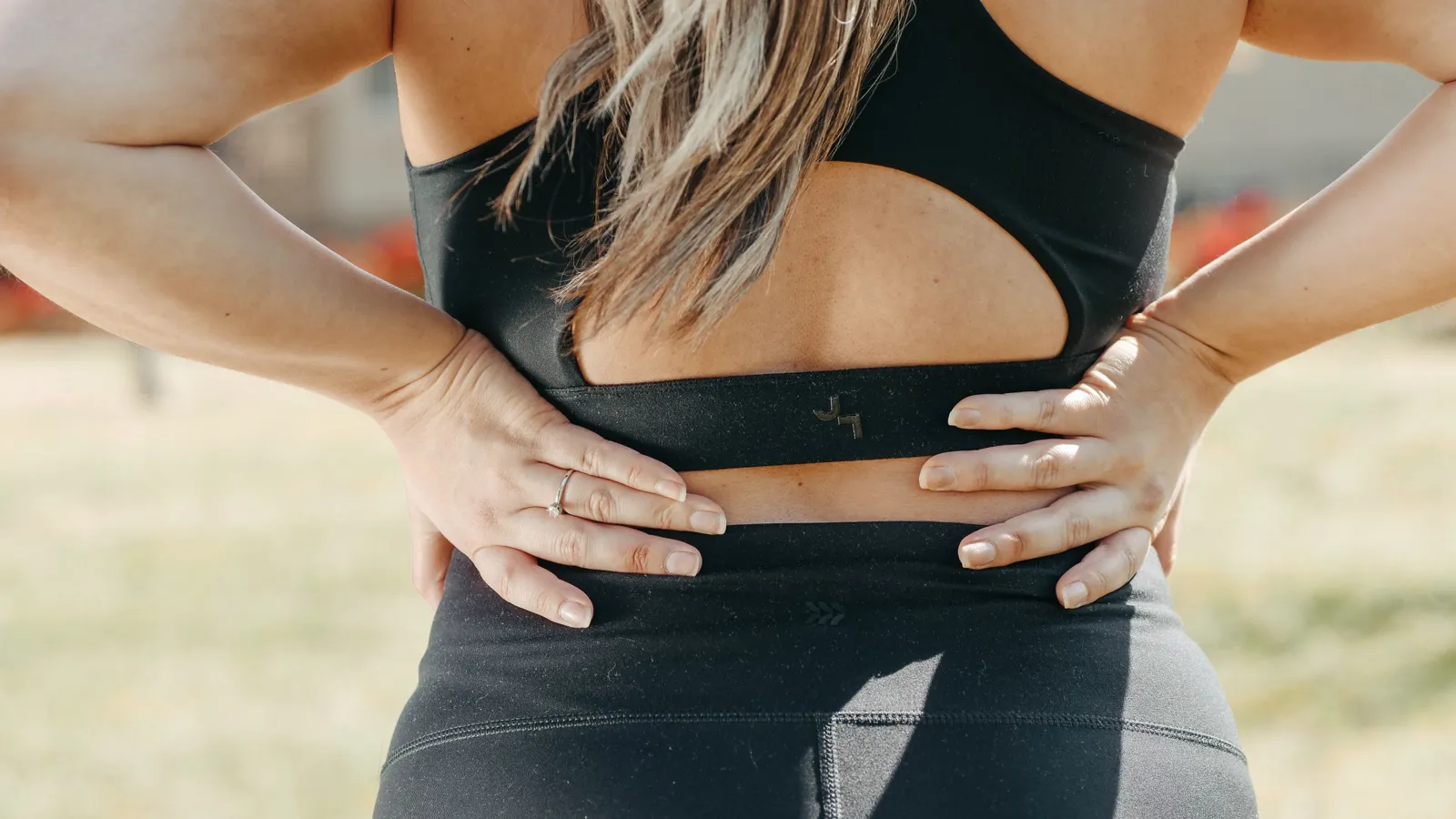
Stop living around your lower back.
A step-by-step home program from a remedial massage therapist with 20+ years in the treatment room. Free up tight hips and legs, build a stronger core, and get back to bending, lifting and sleeping without that familiar ache.
- 15–30 minutes a day, no gym needed
- Follow-along videos for every exercise
- Easier and harder options, so it fits your body today
Lifetime accessAny deviceSecure checkout
Sound familiar?
- You wake up stiff and need a few minutes before you can stand up straight
- Sitting at a desk or in the car for an hour leaves your back aching
- You think twice before picking something up off the floor
- Stretching helps for an hour, then the tightness comes straight back
- Massage feels amazing, but by next week you're back where you started
Your lower back usually isn't the whole problem. Tight hips, glutes and hamstrings and a sleepy core make it do work it was never meant to do. Fix those, and your back finally gets a break.
The same plan we use in the clinic, made for your living room
George has treated thousands of sore backs at Naturally Massage & Wellness. This program is the exact order he takes clients through after their massage: release what's tight, lengthen what's short, then strengthen what's weak, so your results last instead of fading by Friday.
- 1Release
Foam roller, trigger ball and massage stick routines for the glutes, hips, quads, hamstrings and calves. Melt the tension that pulls on your lower back.
- 2Lengthen
Targeted stretches for the hip flexors, quads, hamstrings and glutes, so your pelvis can sit where it should.
- 3Strengthen
Bird-dog, squats, planks, band deadlifts and more, with clear progressions, so your core and legs take the load instead of your spine.
Your 8 weeks, step by step
Short sessions, clear progressions, and a workout log that shows you getting better week by week.
- The full 60-minute Lower Back Self-Care Workshop recording
- Interactive workout log that remembers your last session
- Four recipe books with meal plans
- Certificate of completion
- Week 1Learn the safety rules, take your starting self-check and start the short daily routine.
- Weeks 2–4Add the full routine 2–3 times a week. Most people notice they move more freely and stiffen less.
- Weeks 5–8Progress the strength work, re-test, and see your numbers climb in your workout log.
- For lifeKeep it with a 10-minute maintenance plan and a flare-up plan for the bad days.
Everything you get
Lower Back DIY Program
Relieve lower back pain by freeing the hips and legs and strengthening your core.
Created by George KatsoulisRemedial massage therapist & personal trainerWhat you'll learn
- Know the red flags and use the 0–10 pain rule to train safely
- Measure your starting point and re-test at week 4 and week 8
- Understand how tight hips and weak glutes and core overload the lower back
- Release the glutes, hips and legs with a foam roller, trigger ball and massage stick
- Stretch the hip flexors, quads, hamstrings and glutes
- Build core and leg strength with bodyweight and band exercises, with easier and harder options
- Sit, stand, lift and drive in ways that protect your back
- Keep your results with a maintenance plan and a flare-up plan, plus the full workshop recording
Program content
1Start Here6 lessons · 40 minWelcome, safety, your starting self-assessment, and how and why the program works.
- Welcome: how to use this program6 min
- Safety first: red flags and the pain rule5 min
- Your starting self-assessment15 min
- How your lower back works (and why it hurts)6 min
- Why we roll, stretch, then strengthen5 min
- Start Here: quick quiz3 min
2The Tools1 lesson · 4 minWhat you need and how to use it.
- Resistance Bands4 min
3Postural Strength3 lessons · 2 videos · 24 minWhy posture, mobility and strength work together, and the technique to use for every exercise.
- Postural strength: the key areaFree preview16 min
- Technique Overview5 min
- Postural Strength: recap and quiz3 min
4Posture2 lessons · 7 minHow to sit and stand so your body is balanced.
- Standing & Sitting Posture1 min
- Everyday habits for your lower back6 min
5Balance Discussion1 lesson · 1 video · 15 minWhat balance in the body means and why it matters for pain.
- Balance15 min
6Rolling1 lesson · 15 videos · 43 minRelease tight muscles with self-massage. Do these daily.
- Rolling routine15 videos43 min
7Stretching2 lessons · 6 videos · 14 minLengthen what has tightened. Do these after rolling.
- Stretching routine6 videos11 min
- Rolling & Stretching: recap and quiz3 min
8Strength3 lessons · 11 videos · 49 minBuild the strength to hold good posture. Every second day.
- Progressions and regressions: find your level5 min
- Strength routine11 videos41 min
- Strength: recap and quiz3 min
9Alternate Day2 lessons · 9 videos · 23 minA lighter routine for the days between strength sessions.
- Alternate-day routine9 videos18 min
- Troubleshooting and common mistakes5 min
10Keep Going4 lessons · 27 minRe-test, your maintenance and flare-up plan, a glossary and the final quiz.
- Re-test your progress (week 4 and week 8)15 min
- Keep going: your maintenance plan6 min
- Glossary3 min
- Final review quiz3 min
11Bonus: lower back workshop1 lesson · 1 video · 1 hThe full recording of George's lower back self-care workshop.
- Lower back self-care workshop1 h
12Your workout log1 lesson · 5 minYour routines on one page: tick each exercise, log your reps and band, and beat last time.
- Your program & workout log5 min
Who it's for
- You get a stiff or sore lower back
- You sit for long periods or drive a lot
- You want a plan that goes beyond stretching
- You have been told your back pain is “mechanical” or “non-specific” and want a plan
What you'll need
- Foam roller
- Trigger point ball
- Peanut roller (two balls taped together works)
- Light and medium resistance bands
- A mat or carpeted floor
- Massage stick (optional)
About this program
The lower back often takes the strain for tight hips, glutes and legs. This program releases the glutes, hip flexors, quads, hamstrings and calves, stretches them, and builds strength through the core and legs so your lower back stops doing all the work.
It also includes a recording of George's lower back self-care workshop, so you can go deeper on why it works.
Your instructor
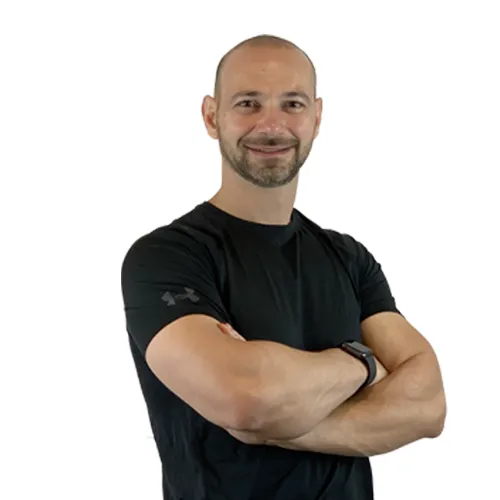
George has been in the health and wellness industry for over 20 years, specialising in remedial massage and personal training for better movement and pain relief. He educates clients on how to improve their own health, runs self-care workshops, and has turned that teaching into easy-to-follow programs you can use in your own time to take back control of your body.
Questions
Do I need a gym?
No. Every routine is done at home or at your desk with a foam roller, a trigger ball and a resistance band. The Tools lesson shows what to buy.
How long does it take each day?
Most routines take 10 to 20 minutes. Rolling and stretching can be done daily; strength work is every second day, with the alternate-day routine in between.
What if an exercise hurts?
Stop any exercise that causes sharp pain. Some discomfort while rolling tight areas is normal, but it should ease as you go. If pain persists, book in with your practitioner.
How long do I have access?
For life. Watch the videos as often as you like; coming back to check your technique is encouraged.
I have sciatica or a disc bulge. Can I do this?
Often yes, but check with your practitioner first. Start at the easiest level and stop any exercise that sends pain, pins and needles or numbness down the leg.
Should I rest when my back is sore?
Usually no. Gentle movement helps most back pain settle faster than bed rest. Use the alternate-day routine and walking, and follow the flare-up plan in the Keep Going module.
There are 15 rolling videos. Do I need them all?
No. The five in your strength-day list are your core. Use the others for areas you know are tight, or when you have extra time.
How soon will I notice a difference?
Rolling and stretching usually feel good straight away. Lasting change comes from the strength work, usually between weeks 3 and 6.
Is this instead of massage?
No, it works alongside it. Treatment settles things quickly; the program keeps the results.
Your back has carried you this far. Give it a plan.
Start today. Lifetime access, at your own pace, on any device.